Article
How to Estimate ElevenLabs Credits and Voiceover Costs
Estimate ElevenLabs usage from script characters, paid revisions, languages, and other media, with a worked example and clearly separated billing options.
Overview
Budget for approved audio rather than finished minutes alone. Count the script, paid revisions, language versions, and any non-speech generation separately before selecting a plan.
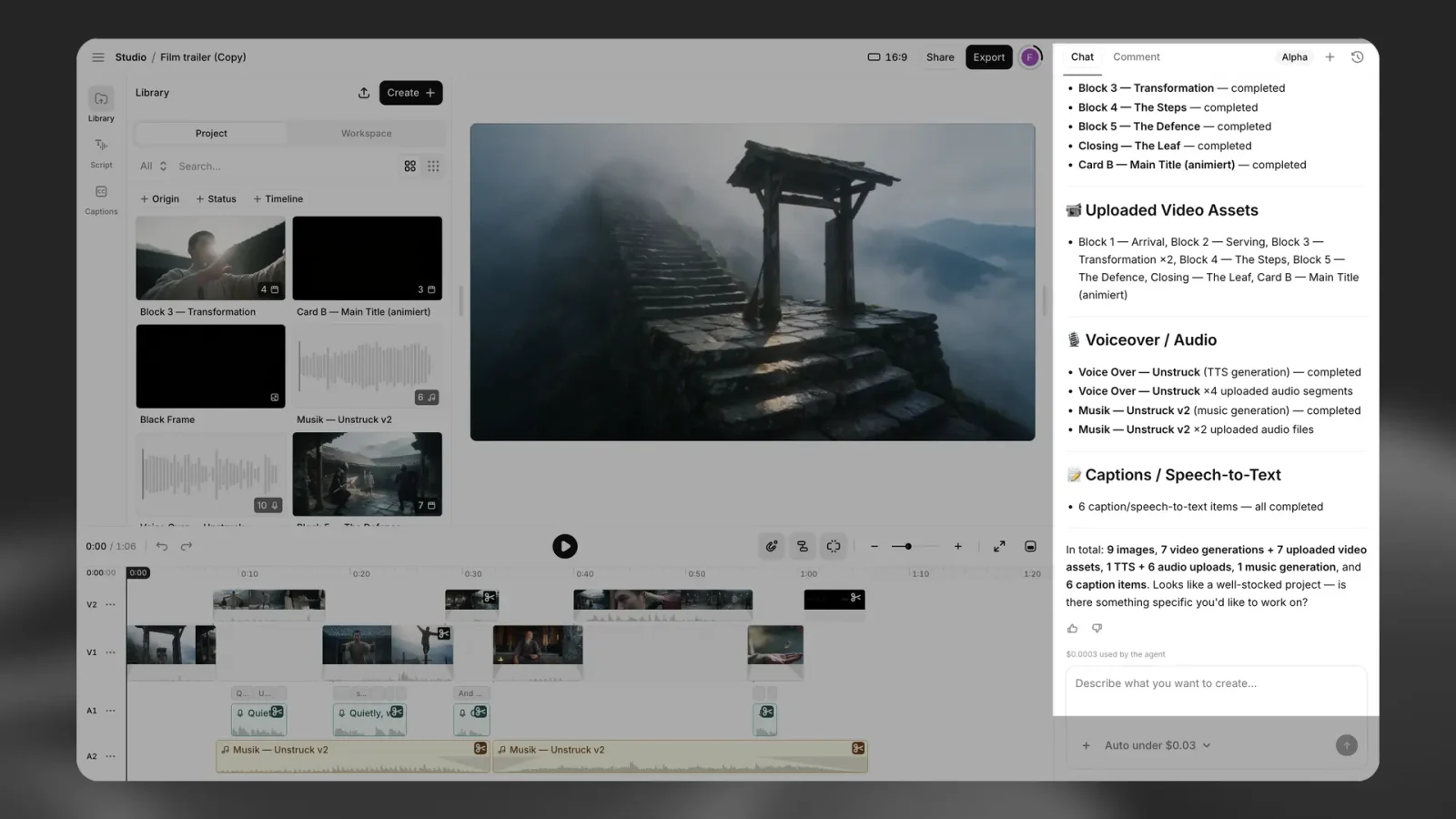
Table of contents
Quick explanation
In Short
- A finished minute is not a universal credit unit.
- Use the selected model’s actual rate and count paid revisions.
- Keep monthly list prices separate from annual billing equivalents.
Count the work that produces the final file
A ten-minute voiceover can involve more than ten minutes of generation. You may reject an early take, change a product name, create another language version, or add music. The useful budget is the usage required to finish approved audio, rather than the runtime of the exported file alone.
ElevenLabs’ pricing page says products draw from a shared credit pool and that speech rates depend on the model. The planning method below uses that documented structure. Its numerical scenario is hypothetical and does not represent a measured account or a guaranteed allowance.
A simple planning formula
For one script, estimate:
Speech credits = characters submitted × credits per character × paid generation multiplier.
Use the actual character count submitted to the selected tool, rather than converting word count with an assumed average. The paid generation multiplier represents charged work: one initial generation plus whatever fraction is regenerated and charged. Apply separate calculations when different passages or language versions use different rates.
Add other products separately. A narration formula cannot price a music track or an Agent conversation unless their own billing rules are included. The Studio documentation distinguishes Agent chat usage from media generation.
Worked example: a small recurring narration project
Assume a hypothetical monthly workload of four scripts, each containing 4,000 submitted characters. Assume one credit per character for this calculation, and assume that revisions add charged generation equal to one quarter of the original script volume. These are planning inputs, not a statement that every ElevenLabs model charges this rate.
| Item | Calculation | Hypothetical credits |
|---|---|---|
| First narration pass | 4 scripts × 4,000 characters × 1 credit | 16,000 |
| Charged revisions | 16,000 × one quarter | 4,000 |
| Speech subtotal | 16,000 + 4,000 | 20,000 |
| Music, dubbing, Agent, or other products | Estimate using each applicable rate | Not included |
Under those assumptions, a speech-only allowance of 30,000 credits would leave 10,000 for additional charged work. That is arithmetic headroom, not a promise that a particular project will fit. A different rate, more revisions, or other generated media changes the result.
For another language, count the translated script itself. Translation changes the text length and may require a separate pronunciation review. Multiplying finished minutes by the number of languages can hide those differences.
Compare the estimate with the correct billing basis
The official page lists these monthly USD plan prices before taxes:
| Plan | Monthly list price | Vendor-listed monthly credits |
|---|---|---|
| Free | $0 | 10,000 |
| Starter | $6 | 30,000 |
| Creator | $22 | 121,000 |
Keep annual monthly equivalents separate from a monthly subscription. Annual billing can require a larger upfront payment. This table uses monthly list prices so the billing basis is consistent; confirm the selected plan and renewal terms on the official pricing page before subscribing.
Plan suitability also depends on commercial-use rights, project limits, and export requirements. A credit allowance that fits the calculation does not by itself establish that the tier is suitable for the deliverable.
What changes the estimate most
Late script edits are one variable you can control. Approve names, prices, and delivery instructions before generating a long chapter. Track rejected passages so the next month’s revision allowance is based on your own production pattern.
Free regeneration conditions are another variable. The TTS documentation describes limited free regenerations under unchanged content and parameter conditions. A text or settings edit may create a charged request. Follow the charge shown in the interface rather than assuming a second take is automatically free.
Image credit: ElevenLabs Studio documentation. Agent interactions and generated media are separate activities to consider in a shared-credit budget.
Keep a small monthly usage record
Record the project, script character count, model, credits charged, revisions, and whether the output was approved. Separate experimentation from client production so a month spent choosing voices does not become the assumed cost of every future lesson.
After a representative project, compare the estimate with the actual charge and revise the inputs. Choose a larger tier only when the recurring workload or required feature justifies it. The Studio review covers export and project considerations, while our script guide addresses preventable wording revisions.
Common questions
Frequently asked questions
Does one character always cost one credit?
No. ElevenLabs says the credit cost depends on the model and product. Use the rate for your actual model and interface; the one-credit example in this article is explicitly a planning assumption.
Are all regenerations free?
No. The documentation describes conditional free regenerations when specified content and settings remain unchanged. Use the interface’s displayed charge rather than assuming every revision is free.