Review
ElevenLabs Review: Voice AI Features, Pricing, and Who It Suits
An editorial look at ElevenLabs for voiceovers, dubbing, voice cloning, and API work, with the credit model and consent requirements kept in view.
PrimeReview may earn a commission when you purchase through links on this page, at no extra cost to you. Read our affiliate disclosure.
At a glance
ElevenLabs
- Brand
- ElevenLabs
- Product type
- SaaS
- Best for
- Creators producing recurring narration or multilingual audio, Product teams integrating speech features through an API, Teams that need a clear route from experimentation to paid commercial use
- Pricing
- Free plan available; paid plans begin at $6 per month before tax, with usage measured through credits. Pricing checked September 30, 2026.
Table of contents
The short answer
Quick Verdict
ElevenLabs is a strong starting point for creators and product teams that need expressive synthetic speech or a voice API, provided they plan around shared credits, commercial-use terms, and consent before cloning a voice.
Key information
- Starting price
- $6/month before tax
- Free plan
- Available
- Platforms
- Web, iOS and Android, API and SDKs
- Best for
- Creators producing recurring narration or multilingual audio, Product teams integrating speech features through an API, Teams that need a clear route from experimentation to paid commercial use
Pros and cons
Pros
- Text-to-speech, speech-to-text, dubbing, voice design, and voice-cloning tools are available within one product family.
- The free tier gives prospective users a practical way to test the interface and voice quality before paying.
- Paid plans add commercial-use rights and higher quotas for production work.
Cons
- Credits are shared across products, so a mixed workflow can be harder to forecast than a single-purpose subscription.
- Voice cloning has consent and rights requirements that a buyer must handle responsibly.
- The most useful plan depends on volume, language needs, output format, and whether work is commercial.
Cost and plans
Pricing overview
Free plan available; paid plans begin at $6 per month before tax, with usage measured through credits. Pricing checked September 30, 2026.
Starting price: $6/month before tax
| Plan | Price | Details |
|---|---|---|
| Free | $0/month | 10,000 credits per month for trying core tools; generated content has non-commercial conditions. |
| Starter | $6/month | 30,000 credits with commercial-use rights and Instant Voice Cloning listed on the current plan page. |
| Creator | $22/month | 121,000 credits and Professional Voice Cloning, subject to the provider's current terms. |
Plan features, credit allowances, promotions, and regional taxes can change. Confirm the current plan page before subscribing.
What ElevenLabs is designed to do
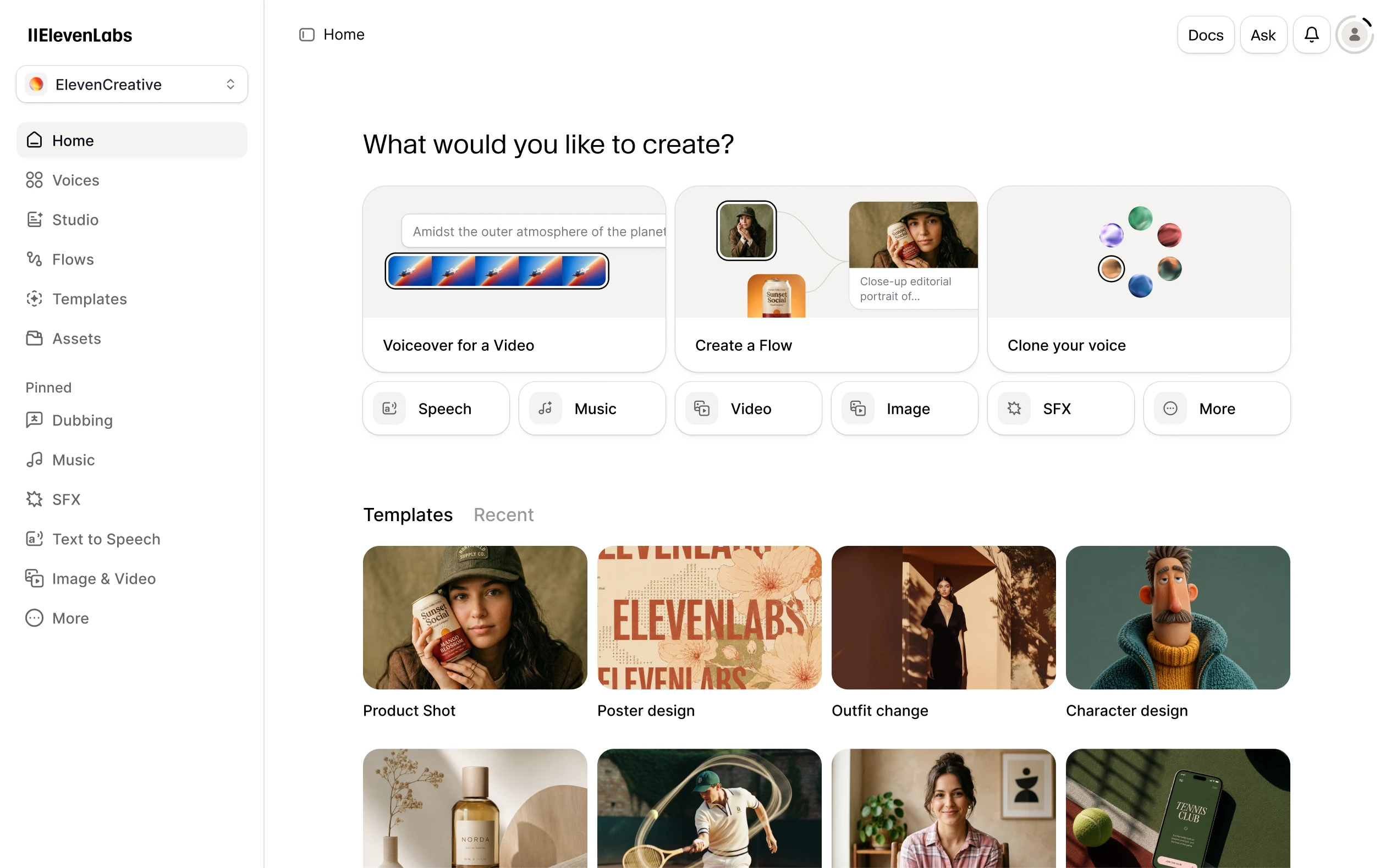
ElevenLabs is a voice-AI platform rather than a single text-to-speech widget. Its product range covers spoken narration, speech-to-text, dubbing, voice design, voice changing, and developer APIs. That breadth is useful when a creator expects an audio workflow to expand, but it also means buyers should begin with one concrete job instead of subscribing because the feature list is long.
For example, a solo video creator may only need narration in one language. A software team may instead need low-latency API speech, a custom voice, or a workflow that has to respect internal data controls. Those are very different buying decisions, even though both begin with “AI voice.”
Official ElevenLabs product visual.
Where it fits best
ElevenLabs makes the most sense when voice is a recurring part of the work: video voiceovers, course material, accessible audio versions of written content, multilingual localization, or a product feature that returns spoken output. The platform also has a free plan, which lowers the cost of evaluating how a voice, pronunciation, and workflow fit a real project.
It is less compelling when the only need is a one-off clip, or when the buyer has not decided whether the output can legally and ethically use a cloned voice. A realistic-sounding result does not remove the need to obtain permission from the person whose voice is being represented.
Pricing: think in credits, not just plan names
The current ElevenLabs pricing page lists a free plan with 10,000 monthly credits, followed by Starter at $6 per month, Creator at $22 per month, and higher-volume plans. The important detail is that credits are shared across the platform’s products. Text-to-speech, dubbing, speech-to-text, music, and other tools can all draw from the same allowance.
That model is flexible, but it can surprise a buyer who only compares the headline monthly price. Before choosing a tier, estimate a normal month of generated characters, revisions, dubbing minutes, and API traffic. Check the current rate for the model you intend to use, because credit costs differ by product and model.
Commercial use is another dividing line. ElevenLabs documents commercial rights on paid plans, while the free plan has different usage conditions. A channel that earns ad revenue, a client project, or a paid course should verify the applicable license rather than assume that a free test is cleared for public commercial distribution.
Voice cloning requires more than good audio
Voice cloning can be a legitimate production tool when the speaker has agreed and the scope of that permission is clear. ElevenLabs states that users must have permission to clone a voice and provides safety tooling around the capability. In practice, a responsible workflow records who approved the clone, what it may be used for, and whether the approval covers editing, localization, advertising, or future revisions.
This is especially important for client work. A technically successful clone can still be the wrong choice if the consent trail is vague or if the client expects ownership terms the selected plan does not provide.
What to test before committing
Do not evaluate a voice tool only with a polished demo sentence. Run a small, representative test with your own script, product names, abbreviations, numbers, punctuation, and the languages your audience actually hears. Compare the time required to revise pronunciation and pacing with the time saved over a conventional recording workflow.
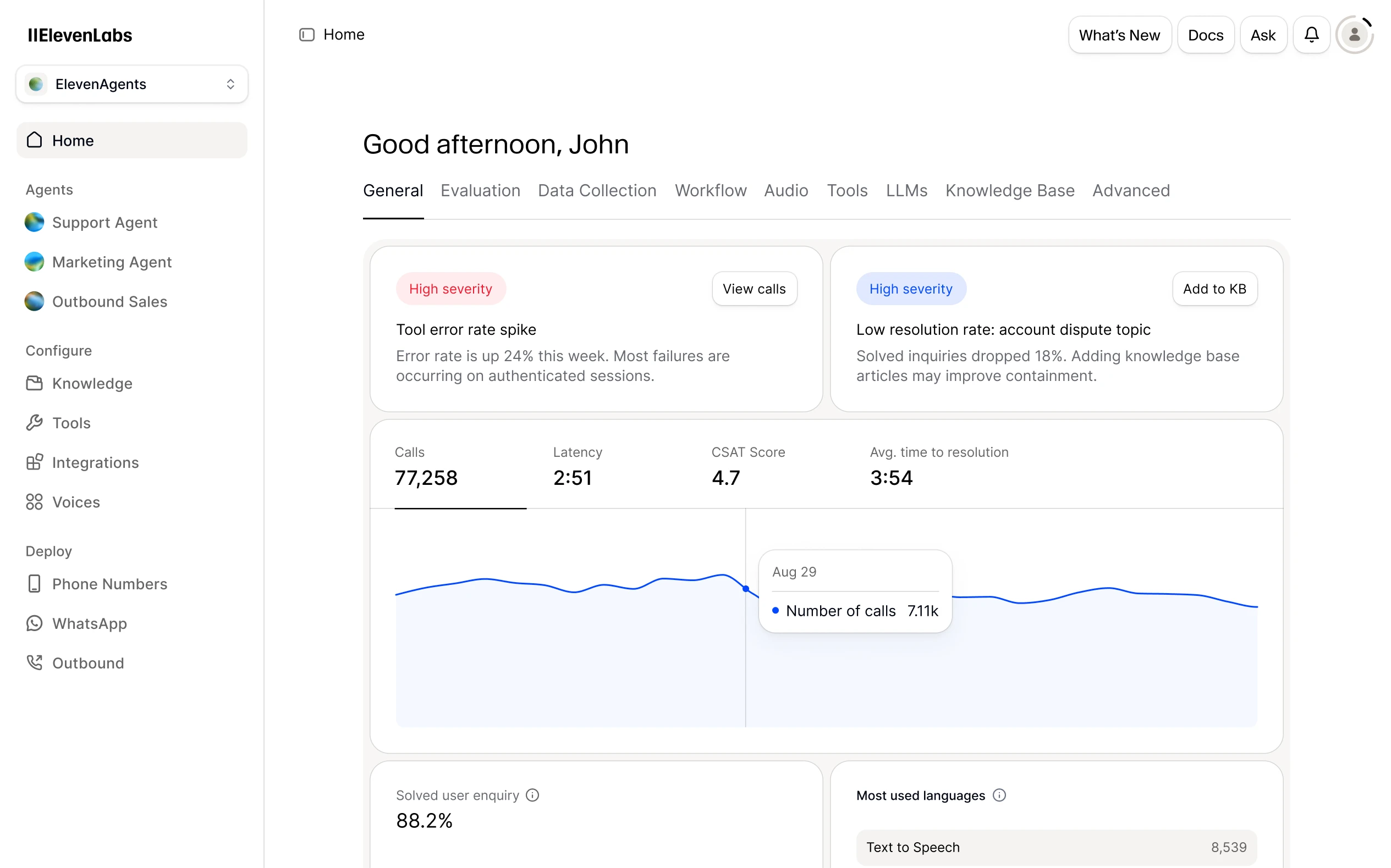
For a developer workflow, test the API limits, latency, error handling, and cost at the type of volume you expect. For creator work, test export settings, project organization, licensing, and whether the available voices fit the tone of the channel. The right plan is the one that handles ordinary work cleanly, not the plan with the longest list of advanced tools.
Official ElevenLabs product visual.
Final take
ElevenLabs offers a capable route into AI-generated audio for both creators and technical teams. Its strengths are the breadth of voice tools and the ability to start small. Its main trade-off is that a shared-credit model rewards careful planning once several capabilities are in use. Start with a real script, make permission rules explicit, and review the current commercial terms before making the service part of a publishing or product workflow.
Common questions
Frequently asked questions
Is ElevenLabs free to try?
Yes. ElevenLabs currently lists a free tier with 10,000 credits per month. Its limits and usage rights differ from paid plans, so check the current plan details before using generated audio commercially.
Can I clone a voice with ElevenLabs?
The provider offers voice-cloning tools, but you must have permission to clone the voice. Treat consent, likeness rights, and the intended distribution channel as requirements, not optional paperwork.
Which plan should a new creator choose?
Start by estimating a normal month of scripts, languages, revisions, and any dubbing work. A free account is useful for testing; a paid tier makes more sense once commercial rights or larger output volumes are needed.